242 Inpatient Beds · 24-Hour Multidisciplinary Rehabilitation Care in Seoul
4.9 Patient Satisfaction
en-US

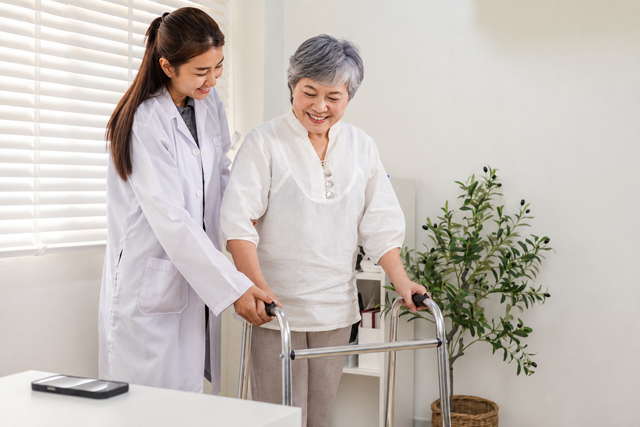
Neurological Rehabilitation · Needs Clinic Confirmation
Gait & Mobility Training
Gait & Mobility Training is a structured rehabilitation approach focused on restoring a patient's ability to walk and move independently following a neurological event such as stroke or spinal cord injury.
Schedule a ConsultationWhat Is Gait & Mobility Training?
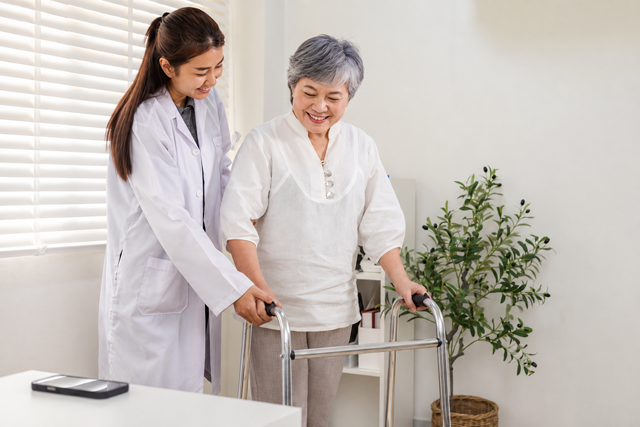
Gait & Mobility Training is a structured rehabilitation approach focused on restoring a patient's ability to walk and move independently following a neurological event such as stroke or spinal cord injury. Rather than jumping straight to walking practice, training follows a step-by-step progression — starting at bed-level mobility, moving through supported standing and balance work, and building toward independent walking — so recovery is layered on a genuinely stable foundation at each stage.
At SEOUL NOVOS HOSPITAL, this progression is supported by advanced gait rehabilitation robotics, including a footplate-based system with a seated, weight-supported design that reduces strain and discomfort during early-stage training. This differs from unassisted gait therapy alone, offering patients consistent, individually optimized practice of natural walking patterns even before they're ready to bear full weight independently.
Who Needs Gait & Mobility Training?
Gait & Mobility Training is appropriate for patients experiencing walking or mobility difficulty following a neurological injury or condition.
- Patients of any age recovering from stroke who are relearning to walk or regain balance
- Individuals recovering from spinal cord injury affecting lower-limb motor function or sensation
- Patients who are not yet ready to bear full weight independently but need structured, supported walking practice
- People experiencing balance difficulty or fall risk following a neurological event
- Patients transitioning from bed-level mobility toward independent walking and outside activity
- Individuals who have plateaued with unassisted gait therapy and may benefit from robotic-assisted training
- Families and caregivers seeking a clear, staged mobility recovery plan rather than an open-ended timeline
- Patients requiring sustained, closely monitored daily training rather than periodic outpatient sessions alone
Meet the Rehabilitation Specialists
| Dr. Jeong Yong Jin, Head of Rehabilitation Medicine at Seoul Novos Hospital. | Dr. Yang Mi Ryeong, Head of Rehabilitation Medicine at Seoul Novos Hospital. |
| Dr. Jeong Yong Jin Rehabilitation Medicine Doctor | Dr. Yang Mi Ryeong Rehabilitation Medicine Doctor |
Gait & Mobility Training at SEOUL NOVOS HOSPITAL is directed by a team of board-certified rehabilitation physicians whose expertise spans motor recovery and neuromusculoskeletal assessment.
Dr. Jeong Yong Jin, Department Head of Rehabilitation Medicine, brings substantial experience in neurorehabilitation and neuromusculoskeletal ultrasound assessment — directly relevant to identifying exactly which muscle groups and neural pathways need targeted retraining during gait recovery.
Dr. Yang Mi Ryeong, Department Head of Rehabilitation Medicine, contributes additional clinical experience in rehabilitation medicine to the team's coordinated approach to mobility recovery planning.
Across the team, the shared care philosophy is consistent: mobility recovery is treated as a staged, physician-guided process, with each phase of training building on genuine, verified progress rather than moving forward on a fixed schedule regardless of readiness.
Gait & Mobility Training: Treatment Areas and Expected Improvements
- Bed-Level Mobility and Early Movement: For patients in the earliest stages of recovery, training begins with basic movement and positioning, building the initial strength and control needed before progressing to supported standing or walking practice.
- Supported Standing and Balance Training: As patients progress, training addresses balance and weight-bearing tolerance, often using a seated, weight-supported robotic system to reduce discomfort and fall risk while still allowing meaningful practice of walking mechanics.
- Robotic-Assisted Gait Training: Using an advanced gait trainer with weight support, patients practice natural stepping patterns repetitively, helping retrain neural pathways and build lower-limb strength under close clinical supervision.
- Overground Walking and Community Reintegration: In later stages, training transitions to unassisted walking, stair navigation, and outdoor mobility, preparing patients for safe return to daily home and community life.
Results, Safety, and Longevity
Gait & Mobility Training is generally well-tolerated when guided by board-certified rehabilitation physicians and trained therapists, with potential risks typically limited to temporary muscle soreness or fatigue following exertion. Because training is supervised closely within a hospital setting, therapy intensity is adjusted dynamically to match each patient's daily condition.
How much mobility function is restored, and how durable those gains are, depends significantly on the underlying neurological condition, the severity of the initial event, how early structured training begins, and consistency of practice over time. While individual outcomes vary considerably, structured gait training provides a systematic framework for maximizing each patient's independent mobility potential.
Why Choose SEOUL NOVOS HOSPITAL for Gait & Mobility Training?
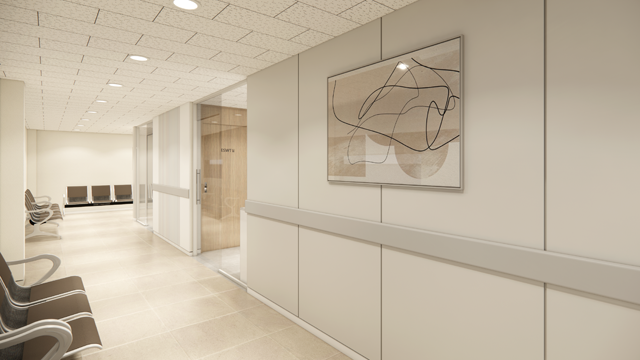
Gait recovery after a stroke or spinal cord injury requires more than a treadmill and an open room — it requires a coordinated team and specialized technology. SEOUL NOVOS HOSPITAL — the largest rehabilitation-specialty hospital in the Seoul area — brings together board-certified rehabilitation physicians (Dr. Jeong Yong Jin, Dr. Yang Mi Ryeong), advanced gait robotics, and a dedicated 24-hour inpatient rehabilitation ward under one roof.
With 242 beds, patients can undergo intensive daily training without the exhaustion of traveling between outpatient clinics. For international patients, Russian- and Chinese-language services are in development, with Korean- and Russian-speaking caregivers available on request.
What Makes SEOUL NOVOS HOSPITAL Special:
- Directed by board-certified rehabilitation physicians specializing in neurorehabilitation
- Advanced gait robotics supporting early-stage, weight-supported mobility training
- Comprehensive 24-hour inpatient rehabilitation environment with 242 beds
- Multidisciplinary team approach coordinating medical, physical, and occupational therapy
Real Patient Examples
Stroke Recovery Patient, 50s
Following a stroke resulting in lower-limb weakness, this patient began structured Gait & Mobility Training at Seoul Novos Hospital. Utilizing weight-supported robotic training in the early stages and progressing to overground walking practice, the patient achieved significant improvements in walking independence and balance.
Spinal Cord Injury Recovery Patient, 40s
After sustaining a spinal cord injury, this patient engaged in a coordinated mobility training program supervised by our rehabilitation medicine team. Through consistent, staged training focused on core stability and stepping mechanics, the patient regained functional mobility supporting daily independence.
Take the First Step Toward Independent Mobility
Whether you are in the early stages of recovery following a stroke or seeking advanced rehabilitation for a spinal cord injury, structured gait training can make a meaningful difference in your mobility journey.
[Schedule Your Rehabilitation Consultation] — Meet with our rehabilitation medicine team to discuss a personalized gait recovery and mobility training plan.
FAQ
items
metaData
Other Services
Explore additional treatments offered by our specialists.
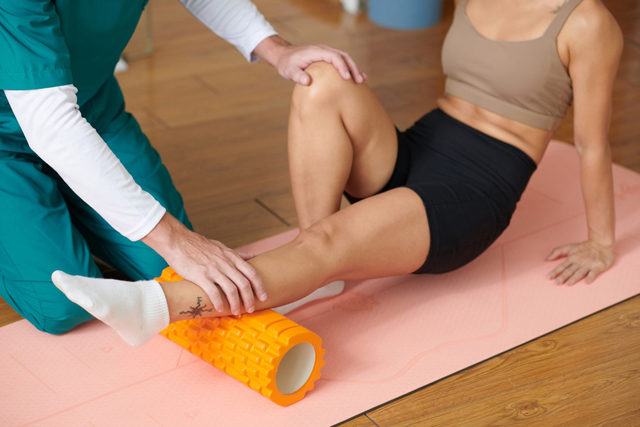
Sports Rehabilitation
Sports Rehabilitation is a structured, physician-guided recovery program designed specifically for athletes and physically active individuals recovering from a sports injury or sports-related surgery.
Learn More

Diabetes Lifestyle Management
Diabetes Lifestyle Management at SEOUL NOVOS HOSPITAL offers comprehensive medical evaluation, glycemic control, and personalized lifestyle guidance for diabetes care.
Learn More
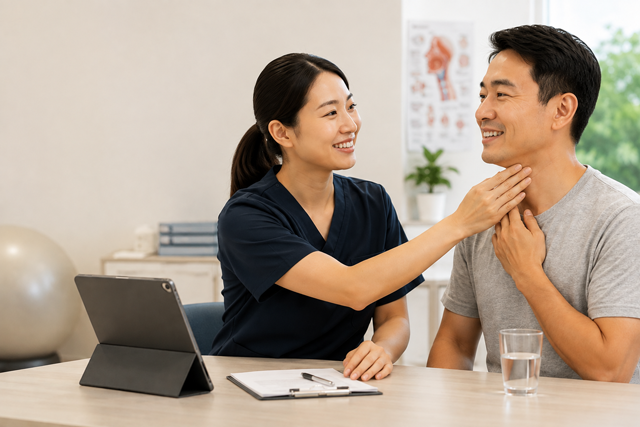
Swallowing Rehabilitation
Swallowing Rehabilitation is a specialized neurological rehabilitation service utilizing clinical evaluation, swallowing therapy, and functional electrical stimulation to diagnose, treat, and overcome dysphagia following stroke or neurological impairment.
Learn More