242 Inpatient Beds · 24-Hour Multidisciplinary Rehabilitation Care in Seoul
4.9 Patient Satisfaction
en-US

· Needs Clinic Confirmation
Diagnostic Imaging
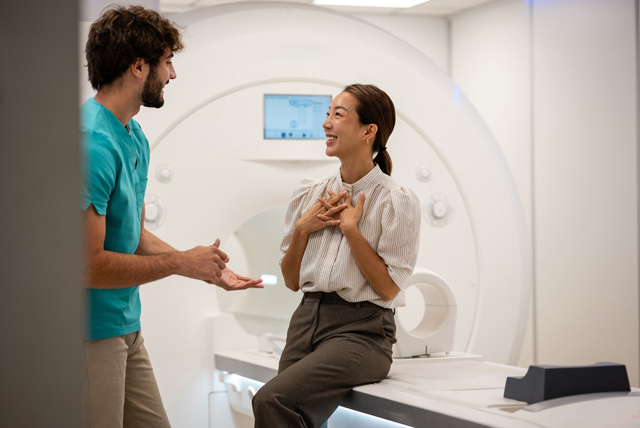
Diagnostic Imaging refers to the full range of tests the Department of Radiology performs and interprets — including plain X-ray, upper GI series (barium studies), CT, MRI, ultrasound, and angiography.
Schedule a ConsultationWhat Is Diagnostic Imaging?
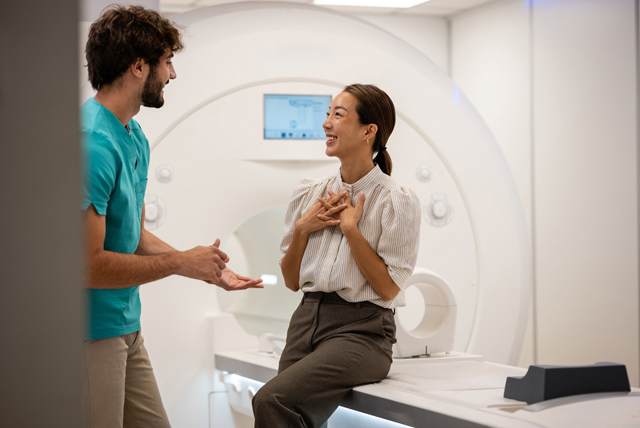
Diagnostic Imaging refers to the full range of tests the Department of Radiology performs and interprets — including plain X-ray, upper GI series (barium studies), CT, MRI, ultrasound, and angiography — providing clinical diagnoses and information that support patient care across every department in the hospital. Rather than functioning as a standalone service, radiology at SEOUL NOVOS HOSPITAL is the diagnostic foundation that other specialists rely on to plan treatment accurately.
The department actively adopts rapidly advancing medical imaging technologies, engaging in dynamic clinical practice that includes digital imaging and minimally invasive angiography using 3D imaging — an approach that prioritizes both diagnostic precision and patient comfort during the imaging process itself.
Who Needs Diagnostic Imaging?
Diagnostic Imaging is appropriate for a wide range of patients needing evaluation for a specific concern, ongoing monitoring, or as part of a broader treatment plan managed by another specialist.
- Patients referred by another department needing imaging to confirm or clarify a diagnosis
- Individuals experiencing symptoms that warrant detailed internal imaging, such as persistent pain or unexplained discomfort
- Patients requiring musculoskeletal imaging to support orthopedic or rehabilitation treatment planning
- People needing abdominal imaging, including evaluation of the liver and other digestive organs
- Postmenopausal women or older men needing bone density evaluation for osteoporosis risk
- Patients requiring cardiovascular imaging, including specialized echocardiography
- Individuals needing minimally invasive, image-guided procedures rather than more invasive alternatives
- Patients concerned about radiation exposure who want imaging performed with dose-reduction technology
Meet the Radiology Specialist

Dr. Oh Seung Yong
Radiology Expert
Diagnostic Imaging at SEOUL NOVOS HOSPITAL is directed by Dr. Oh Seung Yong, Hospital Director and head of the Radiology department.
Dr. Oh is a graduate of Soonchunhyang University College of Medicine, where he also completed his internship and Radiology residency at Soonchunhyang University Hospital. He holds full membership in the Korean Society of Radiology, the Korean Society of Ultrasound in Medicine, and the Korean Society of Cardiovascular Imaging, and serves as Finance Director of the Dobong-gu Medical Association — reflecting both clinical depth and active professional leadership within the local medical community.
Dr. Oh's oversight of the Radiology department reflects a shared care philosophy: imaging is performed and interpreted with the specific clinical question in mind, providing the diagnostic information other specialists need to make sound treatment decisions, rather than generating imaging reports in isolation from a patient's broader care.
Diagnostic Imaging: Treatment Areas and Expected Improvements
- MRI Imaging: The hospital's Siemens MAGNETOM Vida 3.0T MRI resonates hydrogen atomic nuclei within the body and reconstructs the resulting signal information into three-dimensional cross-sectional images of the entire body, with zero radiation exposure — providing detailed diagnostic imaging for a wide range of conditions without the radiation considerations of other imaging types.
- CT Imaging: The Canon Aquilion PRIME SP 160-slice CT scanner is equipped with radiation dose reduction technology, capturing equivalent image quality while reducing radiation dose by up to 75% compared to conventional systems, and reducing exposure to radiation-sensitive areas such as the eyes, thyroid, and breast by up to approximately 30%.
- Ultrasound and Echocardiography: High-resolution ultrasound equipment provides real-time internal imaging of soft tissues, abdominal organs, and the heart, supporting immediate diagnostic assessment without radiation exposure.
- Fluoroscopy and X-ray: Digital radiography and fluoroscopy systems provide rapid, high-detail imaging for bone fractures, joint assessments, and real-time procedural guidance.
What to Expect During Diagnostic Imaging
Before the Imaging Procedure
When you arrive for your scheduled imaging appointment, our radiology staff will verify your patient details, review the specific clinical order from your referring physician, and confirm that you meet all safety criteria for the planned test.
For certain specialized procedures — such as contrast-enhanced CT, MRI, or specialized abdominal ultrasound — you may receive specific preparatory instructions beforehand, such as fasting guidelines or medication instructions. For MRI scans, staff will conduct a thorough safety screening to check for metal implants, pacemakers, or other devices that require special clearance.
During the Procedure
During the imaging session itself, the radiology technologist will position you carefully on the examination table and explain what to expect.
- For X-ray and CT scans: You will be asked to remain still for brief intervals while images are captured. CT scans involve a motorized table moving through a ring-shaped gantry, accompanied by the gentle humming of the scanner.
- For MRI scans: You will lie comfortably on the table as it slides into the scanner tunnel. You will hear rhythmic tapping and knocking sounds as the magnetic gradients operate; earplugs or headphones are provided to ensure your comfort.
- For Ultrasound examinations: A warm, water-based gel is applied to the skin over the target area, and a handheld transducer is gently moved across the skin to capture real-time images.
After the Procedure
Once your imaging is complete, you can generally return to your normal daily activities immediately, unless contrast administration or specific sedation guidelines require a brief observation period.
Our board-certified radiologists examine the captured images in detail, preparing a comprehensive diagnostic report that is transmitted securely to your referring physician. Your referring specialist then reviews these results with you in detail during a follow-up consultation, incorporating the findings directly into your ongoing treatment plan.
Possible Risks & Limitations
Diagnostic imaging performed at SEOUL NOVOS HOSPITAL utilizes advanced, modern equipment designed with safety and dose optimization as core priorities, but patients should be aware of certain inherent limitations and considerations:
- Radiation Exposure: X-ray and CT scans utilize ionizing radiation. While the hospital uses advanced dose-reduction technology (such as the Canon 160-slice CT's iterative reconstruction), any exposure carries a minimal theoretical risk. The clinical benefit of an accurate diagnosis significantly outweighs this risk for ordered scans.
- Contrast Reactions: Procedures requiring iodinated or gadolinium-based contrast agents carry a small risk of allergic reaction, ranging from mild itching to rare severe reactions. Staff screen patients carefully for kidney function and allergy history beforehand.
- MRI Claustrophobia and Metal Restrictions: MRI examinations require lying within an enclosed scanner. While our 3.0T MRI features a wider bore to improve comfort, patients with severe claustrophobia may require mild sedation. Additionally, certain implanted metallic devices can restrict MRI safety.
- Diagnostic Limitations: No single imaging test is infallible. Certain tissue structures or early-stage conditions may occasionally require supplementary imaging or clinical correlation to confirm a diagnosis conclusively.
How long the diagnostic insights last depends on the underlying condition being monitored — for acute injuries, imaging provides an immediate baseline for active treatment, while for chronic conditions, follow-up imaging at scheduled intervals helps track disease progression or treatment response over time. As with any medical procedure, individual response and equipment factors can influence imaging clarity, and results should be interpreted in the full context of a physical examination and clinical history.
Why Choose SEOUL NOVOS HOSPITAL for Diagnostic Imaging?

A diagnostic report is only as reliable as the equipment that captures it and the expertise that interprets it, which is why SEOUL NOVOS HOSPITAL has invested in premium-tier imaging technology backed by physician-led interpretation. Under the direction of Dr. Oh Seung Yong, the Department of Radiology operates with high-end diagnostic hardware — including the Siemens MAGNETOM Vida 3.0T MRI and the Canon Aquilion PRIME SP 160-slice CT scanner — ensuring that every scan provides the anatomical detail other specialists need for precise clinical decision-making.
Operating as a 242-bed hospital with approximately 150 therapists and 150 nursing staff, our diagnostic services are fully integrated with inpatient care, emergency support, and specialized departments like orthopedics, neurology, and rehabilitation. Whether an emergency evaluation requires rapid CT scanning or routine follow-up calls for precise MRI imaging, diagnostic services operate with seamless coordination across departments.
For international patients, Russian- and Chinese-language services are in development, with Korean- and Russian-speaking staff available on request to assist throughout the diagnostic process.
What Makes SEOUL NOVOS HOSPITAL Special:
- Premium Siemens 3.0T MRI and Canon 160-slice CT scanners delivering high-resolution imaging with radiation reduction technology
- Direct physician leadership under Dr. Oh Seung Yong, ensuring clinical expertise guides every interpretation
- Seamless integration with hospital departments, supporting rapid diagnosis and coordinated treatment planning
- Inpatient and emergency diagnostic support operating around the clock
Real Patient Examples
Unexplained Joint Pain Patient, 40s
Experiencing persistent knee and shoulder discomfort that limited daily activity, this patient was referred to Radiology for detailed MRI evaluation. The 3.0T scan identified early cartilage micro-tears that standard X-rays missed, allowing the orthopedic team to initiate targeted regenerative treatment before the condition worsened.
Routine Health Screening Patient, 50s
As part of a comprehensive group health screening, this patient underwent low-dose chest CT and abdominal ultrasound. The imaging successfully ruled out early pulmonary and hepatic abnormalities, providing reassuring baseline health data and peace of mind.
Get Clear Answers to Your Health Questions
Accurate treatment begins with accurate diagnosis. Whether you've been referred by a specialist or need clarity on a persistent health concern, our radiology team is here to provide precise, advanced diagnostic imaging.
[Schedule Your Diagnostic Imaging Consultation] — Meet with our specialist team for a thorough evaluation, expert imaging recommendations, and clear guidance on the right diagnostic tests for your health needs.
FAQ
items
metaData
Other Services
Explore additional treatments offered by our specialists.

Sports Rehabilitation
Sports Rehabilitation is a structured, physician-guided recovery program designed specifically for athletes and physically active individuals recovering from a sports injury or sports-related surgery.
Learn More

Diabetes Lifestyle Management
Diabetes Lifestyle Management at SEOUL NOVOS HOSPITAL offers comprehensive medical evaluation, glycemic control, and personalized lifestyle guidance for diabetes care.
Learn More

Swallowing Rehabilitation
Swallowing Rehabilitation is a specialized neurological rehabilitation service utilizing clinical evaluation, swallowing therapy, and functional electrical stimulation to diagnose, treat, and overcome dysphagia following stroke or neurological impairment.
Learn More